Insights
Apr 1, 2026
When Growth Problems Aren’t Really Growth Problems
That tension sits at the center of this episode of the Healthy Enterprise Podcast, where host Heath Fletcher sits down with Real Rousseau, Chief Strategy Officer at Bullzeye Media Marketing and Bullzeye Global Growth Partners.
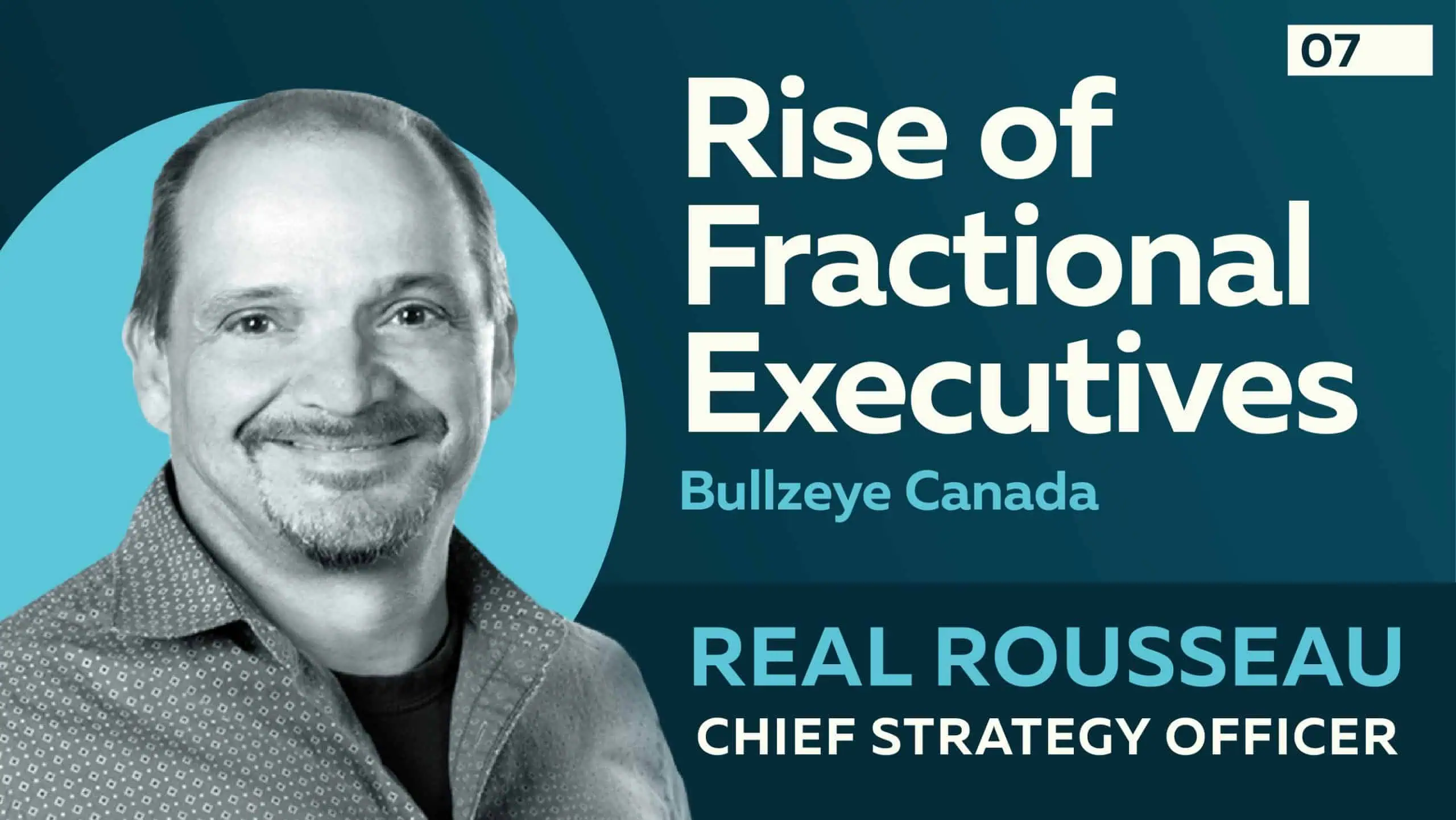
A Conversation with Real Rousseau
Growth is exciting when everything is working. New customers come in, the team expands, and momentum builds. But many founders eventually hit a point where things feel harder than they should. Execution slows down. Teams lose alignment. The business feels busier than ever, yet progress starts to stall.
That tension sits at the center of this episode of the Healthy Enterprise Podcast, where host Heath Fletcher sits down with Real Rousseau, Chief Strategy Officer at Bullzeye Media Marketing and Bullzeye Global Growth Partners. Real works closely with founders, CEOs, and leadership teams at moments when businesses are trying to grow, but something inside the organization is holding them back. His perspective is refreshingly simple. In many cases, the problem is not a lack of ideas or ambition. It is a lack of clarity.
An Engineer’s Approach to Business Strategy
Real’s journey into strategy did not begin in a boardroom. It began in engineering. Early in his career, he worked on infrastructure projects, designing bridges and roads, before eventually moving into entrepreneurship and executive leadership.
That background still shapes the way he approaches business problems today. Engineers are trained to examine systems, identify stress points, and understand how each piece of a structure supports the whole. As he explained during the conversation:
“My technical background and my education are in engineering. I used to design bridges and roads and that kind of stuff for a living. But the last 20 years or so, I've been involved in businesses from startups, entrepreneurship, operational management, executive leadership development, and more recently, fractional consulting.”
That systems perspective allows him to see something many leadership teams miss. A company’s growth rarely depends on one department or one tactic. It depends on how well the entire organization functions together.
Why Fractional Leadership Is Becoming More Common
Many founders reach a point where they know the business needs more leadership experience around the table. The challenge is that hiring a full executive team too early can be expensive and risky. That is where fractional leadership has started to gain traction. The concept allows companies to bring senior-level expertise into the organization without committing to a full-time executive salary. Instead, businesses work with experienced leaders on a flexible basis that aligns with their stage of growth. Real explains the appeal clearly:
“You get the expertise of someone at the executive level at the table with you for a fraction of the cost. It’s not a full-time executive wage. Often it’s some kind of retainer structure that works with the company’s budget.”
For companies navigating growth, that kind of support can be transformative. Instead of trying to figure everything out alone, founders gain access to experienced leadership earlier in the process.
The Difference Between a Consultant and a Fractional Executive
At first glance, fractional executives may sound similar to consultants. Both bring outside expertise into a company. But the way they engage with a business is very different. Consultants typically operate with a defined scope of work and a clear end date. They analyze problems, provide recommendations, and deliver reports. Fractional executives operate inside the leadership structure itself. Real describes the difference this way:
“A consultant engagement usually has a start and end date. But with a fractional executive, you’re part of the team. You're sitting at the table helping determine priorities and helping the company move forward.”
That difference changes the dynamic entirely. Instead of advising from the outside, fractional leaders share responsibility for decisions and outcomes alongside the rest of the executive team.
When Founders Start Feeling the Pressure
Most companies begin with a founder who is exceptionally good at something. It might be building products, delivering a service, or solving a technical problem. As the company grows, however, the founder’s role changes. Suddenly, they are responsible for hiring, financial oversight, internal processes, and strategy all at once. Over time, the pressure builds. Real describes one of the most common signals that a company may need additional leadership support:
“The obvious ones are burnout. You're wearing so many hats that the things you know you do best, you're not doing anymore.”
Instead of focusing on the work that created the company in the first place, founders find themselves buried in operational decisions and internal management. That shift is often the moment when fractional leadership becomes valuable.
Why Structure Matters More Than Most Companies Think
Many businesses assume their biggest growth challenge is marketing or sales. While those areas are important, Real often sees something else entirely. The real issue is usually structure. Teams move quickly, adopt new tools, and experiment with ideas, but without a clear framework connecting everything together, execution becomes messy. Processes break down, and accountability becomes harder to maintain. Real summed it up with one line during the conversation that captures the problem perfectly:
“Creativity without structure is chaos.”
He shared an example of a company operating with more than 65 different tools and applications, many of which performed similar functions. Over time, those small decisions created a tangled operational environment that slowed the company down. When structure is missing, even great ideas become difficult to implement.
Turning Strategy Into Action
Strategy discussions can often feel abstract. Many leadership teams spend hours discussing ideas without creating a clear path for execution. Real approaches strategy differently. His focus is on translating strategy into real operational movement. That often includes several foundational steps:
• Clarifying the company’s vision
• Aligning teams around shared priorities
• Defining roles and organizational structure
• Building financial models that support decisions
• Creating short execution cycles to maintain momentum
Rather than long-term planning that sits on a shelf, the work happens in focused bursts. As Real explained:
“We use a lot of agile thinking. Three-month sprints. Pick the most important priorities and sprint those. Roll up our sleeves, get things done, and help the company get ready for growth.”
That approach keeps strategy grounded in execution instead of theory.
Why Outside Perspective Can Unlock Progress
One of the unique advantages of fractional leadership is the perspective it brings. Fractional executives often work with multiple companies across different industries, which allows them to recognize patterns that internal teams may overlook. During the conversation, Heath highlighted how that exposure becomes valuable. Leaders like Real accumulate insights from different organizations, operational models, and leadership styles. Those experiences become tools that can be applied elsewhere.
For founders who are deeply immersed in their own companies, that outside perspective can reveal blind spots that would otherwise remain invisible. Sometimes progress does not require a completely new strategy. Sometimes it requires someone who can help leadership see what has been there all along.
Listen or Watch the Full Episode
If this conversation grabbed your attention, the full episode dives deeper into the realities of fractional leadership and how companies can use it to navigate growth challenges. Heath and Real explore the operational side of scaling a company, the early warning signs founders should watch for, and why clarity inside an organization often matters more than strategy itself.
Let’s Bring Clarity to Your Growth Strategy
Growth rarely slows because companies lack ambition. More often, it slows because leadership teams are trying to scale without the clarity, structure, or operational alignment required for the next stage. That is where the right strategic perspective can make a difference. At Bullzeye Global Growth Partners, we work alongside founders and leadership teams to diagnose what is actually holding a business back and help design the systems needed to support sustainable growth.
Connect with Bullzeye Global Growth Partners to explore what a true growth partner relationship looks like, built around clarity, accountability, and the kind of execution that keeps momentum moving forward.