Insights
Apr 1, 2026
Changing the Breast Imaging Experience
This episode of the Healthy Enterprise Podcast, where Heath Fletcher sits down with Naomi Cosman, Global Head of Marketing and Investor Relations at Koning.
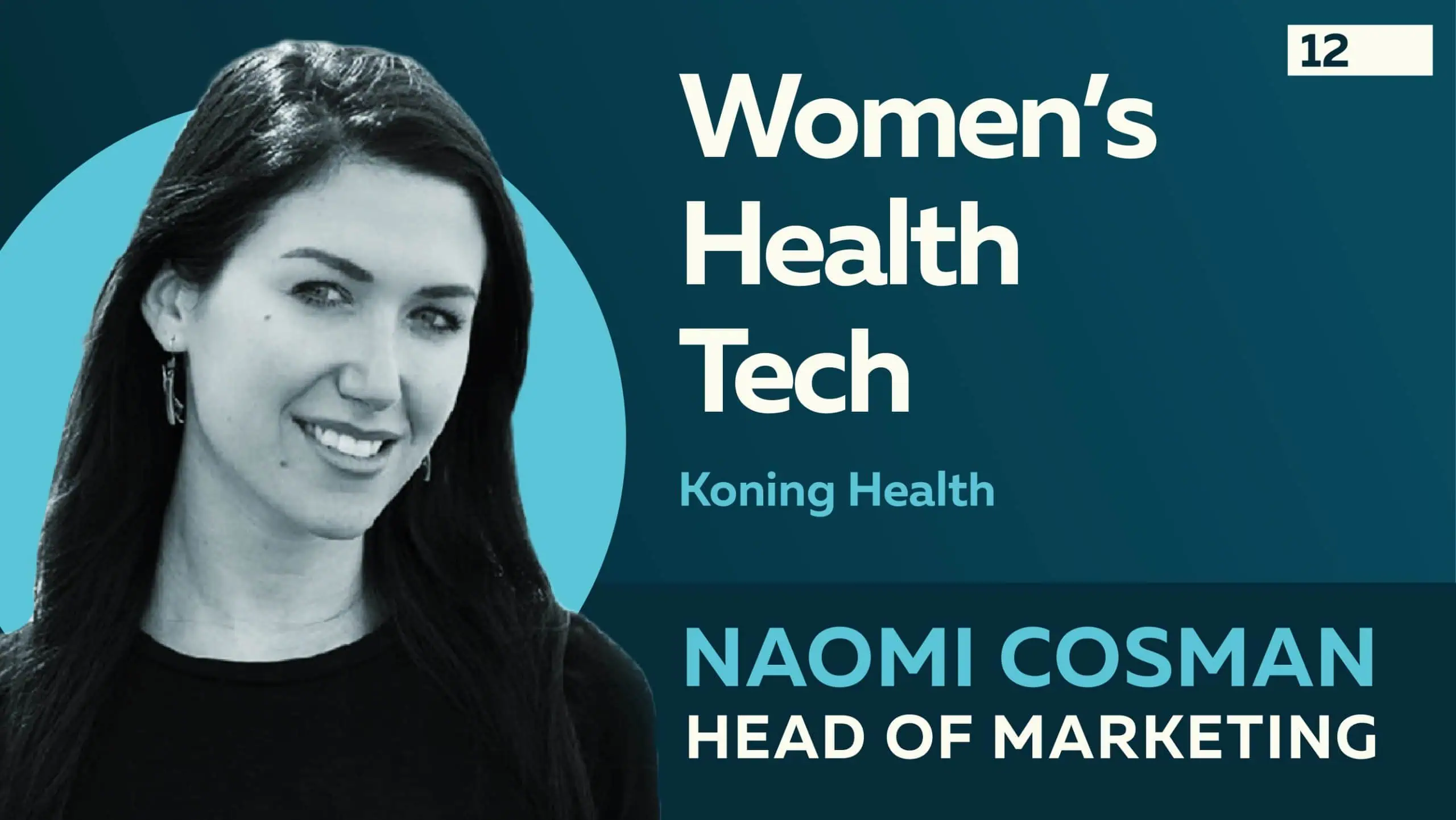
Naomi Cosman on Innovation, Access, and What it Takes to Change a Long-Standing Industry.
When a healthcare product solves a real problem, people feel it immediately. That is exactly what comes through in this episode of the Healthy Enterprise Podcast, where Heath Fletcher sits down with Naomi Cosman, Global Head of Marketing and Investor Relations at Koning. Their conversation centers on a technology that is trying to change something women have tolerated for far too long: an uncomfortable, often painful breast imaging experience that has barely changed in decades.
What makes this episode so strong is that it does not stay at the surface. Yes, it covers the technology. Yes, it talks about breast imaging, patient comfort, and early detection. But it also gets into something bigger: what it takes to introduce a better solution into an industry that does not move quickly, how startup marketing has to work when you are educating multiple audiences at once, and why meaningful healthcare innovation needs both passion and persistence behind it.
A Better Experience Was the Starting Point
Naomi does a great job early in the conversation explaining what Koning actually does and why it matters. Koning manufactures the Koning Vera Breast CT, a device designed to give women a faster, more dignified breast imaging exam with true 3D images and no breast compression. That difference is the heart of the story. As Naomi explains:
“What Coning does is we are a manufacturer of the Coning Vera breast CT. Basically, a revolutionary device in the breast imaging space that allows for a woman to get a quicker, more dignified exam that showcases beautiful images in true 3D.”
She then makes the contrast even clearer by describing what women are used to with a mammogram: compression, discomfort, multiple images, and less clarity for women with dense breasts. Koning’s device was built to answer a problem that has been sitting in the industry for more than 60 years. And the patient experience sounds dramatically different.
“It is all hers. She puts herself on the device kind of like a massage table, and she's in and out in a few minutes.”
That line sticks because it captures what innovation should feel like. Not more complexity. Not another workaround. Something simpler, more respectful, and easier to say yes to.
Why Patient Comfort Is Not a Small Detail
One of the most important parts of the episode is how clearly Naomi ties comfort to compliance. This is not just about making an exam more pleasant. It is about helping more women actually get screened. She points out that many women who should be getting annual exams are not, and one of the biggest reasons is the pain and discomfort associated with compression.
“Half of the women that are supposed to be getting their annual exam don’t, and that is largely due to the pain from compression.”
That is a major point, and it is one of the biggest takeaways from the episode. In healthcare, people often talk about innovation in terms of better images, faster technology, or improved workflows. Those things matter. But if the patient avoids the test altogether, none of it helps. Naomi frames the bigger purpose of the technology really well when she says:
“If we can avoid the compression, the pain, and the lack of dignity that women feel when they’re getting this very important exam, then we can get more women checked.”
That is the kind of line that defines the conversation. It is not just about product features. It is about removing barriers that keep people from getting care.
Why Early Detection Changes Everything
The podcast also stays grounded in the bigger health reality behind all of this. Breast imaging is not just a technical conversation. It is a life conversation. Naomi makes it clear that early detection is the reason this work matters so much. The easier it is for women to get screened, the better the chance of catching cancer early, when outcomes can be dramatically better. She also shares that her connection to this work is personal, which gives the conversation more weight.
“As a woman and as somebody who knows people who have gone through breast cancer, it’s very meaningful. Being able to make a difference in women’s lives is really the reason that I wake up every morning and am happy to do my job.”
This is more than a startup story. For Naomi, this is personal, practical, and urgent all at once.
A Good Product Does Not Automatically Win
One of the strongest sections in the episode is the part where Naomi talks about industry resistance. It would be easy to assume that if a new device is more comfortable, produces strong images, and improves workflow, the industry would rush to adopt it. That is not how it works. Naomi is honest about how slow-moving and resistant the space has been, especially when a company is trying to introduce something truly different.
“The only pushback that we really get is from the industry, and that’s really the unfortunate part about being in a company that is revolutionary like this. It is an industry that doesn’t change very quickly.”
That line says a lot. Healthcare is filled with systems, habits, legacy equipment, and very large incumbents. Even when a better option enters the market, adoption takes time. She explains how the tone has changed over the years. When she first started attending industry conferences, the reaction was mostly skepticism.
“There were so many naysayers. It was too experimental. We’ve never done CT with breast before.”
Now the questions are more specific and more serious. Instead of dismissing the technology, people are asking how it works, how the images are read, and what implementation looks like. That is real progress.
Why Marketing Has to Work in Every Direction
This episode is especially interesting because Naomi is not just talking about a product. She is talking about how to market a healthcare startup that has to speak to very different audiences at the same time. She explains that Koning has to market to patients, physicians, and investors, and each audience needs a completely different message.
“That’s three ways of messaging that are completely different. You just can’t overlap those.”
That is such an important point, especially for healthcare and health tech companies. Patients need trust, clarity, and confidence. Physicians need evidence, technical detail, and workflow value. Investors need growth potential, a business case, and long-term upside. Naomi breaks that down clearly:
Physicians want to understand the technology, throughput, and how it helps their business succeed
Investors want to understand ROI and scalability
Patients want to know they can trust the exam and that it may help save their life
This is where the episode becomes bigger than breast imaging. It becomes a conversation about what good healthcare marketing actually looks like when the stakes are high and the audience is layered.
Why Real Women Became the Best Message
Another strong insight from the conversation is what actually performs best in Koning’s marketing. You might assume the most effective content would be polished technical explanations or highly produced educational campaigns. Naomi says that while those things matter, what truly resonates is much simpler.
“What really resonates with our followers is real women getting an exam.”
That makes perfect sense. In a category like this, people want proof. They want to see what the experience actually looks like. They want to hear from someone who did it, not just from a company that made the machine. Naomi explains why that kind of patient-to-patient communication is so valuable:
“They see a woman getting on the device and talking about their experience. That is so invaluable to us.”
This is one of the strongest marketing lessons in the whole episode. When the product is personal, lived experience becomes one of the most persuasive forms of communication you have.
Mobile Units Could Change Access in a Big Way
One of the most hopeful parts of the episode is the conversation around mobile units. Heath brings this up, and it opens up a huge opportunity around accessibility. Naomi confirms that Koning already has a mobile unit and that mobile scan days are being used by employers and organizations as a preventative health benefit for women.
That matters for several reasons. It creates easier access. It brings the technology closer to women who may not live near a major clinic. It also creates a completely different path for adoption through employers and community-based outreach. Naomi talks about how meaningful these scan days can be:
“Employees see this as a huge benefit… and the women are grateful to their companies for providing it.”
That is a big idea. Mobile units are not just a convenience play. They are an access play, a trust play, and a potentially powerful way to expand awareness in underserved areas, rural communities, and places where traditional imaging access is harder to find.
Insurance Is Still a Major Hurdle
The episode also does not avoid one of the biggest real-world barriers: insurance. Naomi is clear that this is still an uphill climb, even though some progress is being made in Atlanta and the surrounding areas. Right now, more clinics and patients are accessing the exam through cash-pay models than through broad insurance coverage.
That is frustrating, but Naomi does not pretend otherwise. She explains that this part of the process involves a lot of complexity, including local relationships, clinic advocacy, and even political and lobbying efforts. It is slow, but it is moving. In the meantime, she also points out something important: women are showing a willingness to pay for this because they see value in the experience and peace of mind. That says a lot about how strong the demand could be once coverage becomes more common.
Why Startups Like This Need Marketing Everywhere
Toward the end of the episode, the conversation shifts into one of the strongest broader marketing insights Naomi shares. She talks about how marketing should not live in isolation, especially in a healthcare startup. She makes a strong case that the marketing team needs to be in the room, aware of product updates, feature changes, internal decisions, and company messaging at every level.
“The best way that companies can go about it is to make sure that the marketing team is involved in all the conversations.”
That line reflects a much more integrated way of thinking. In a company like Koning, messaging is not something that happens after the fact. It has to happen alongside product, sales, leadership, and thought leadership. And Naomi clearly understands that. In this conversation, she comes across not just as a marketer but as someone helping translate innovation into trust, awareness, and adoption.
Listen or Watch the Full Episode
If this conversation grabbed you, the full episode is worth your time. Heath and Naomi cover much more around the Koning Vera Breast CT, patient comfort, physician adoption, the realities of startup marketing, and the uphill work of changing a long-standing healthcare category.
Tell a More Meaningful Growth Story with Bullzeye Global Growth Partners
Breakthrough technologies do not transform industries on their own. They only create real change when people understand them, trust them, and feel confident adopting them. That is where strategy, communication, and positioning become just as important as the innovation itself. At Bullzeye Global Growth Partners, we work with healthcare and life science companies to help translate complex innovation into messaging and growth strategies that accelerate real adoption.
If your organization is building something that deserves greater visibility and market traction, connect with Bullzeye Global Growth Partners to explore how the right growth partnership can help bridge the gap between innovation and impact.