Insights
Apr 1, 2026
Making Work Feel Better
Heath Fletcher sits down with Elissa Zylbershlag, founder of Work Wise Labs, for a conversation about proactive HR, positive psychology, leadership coaching, and how healthier workplaces do not happen by accident.
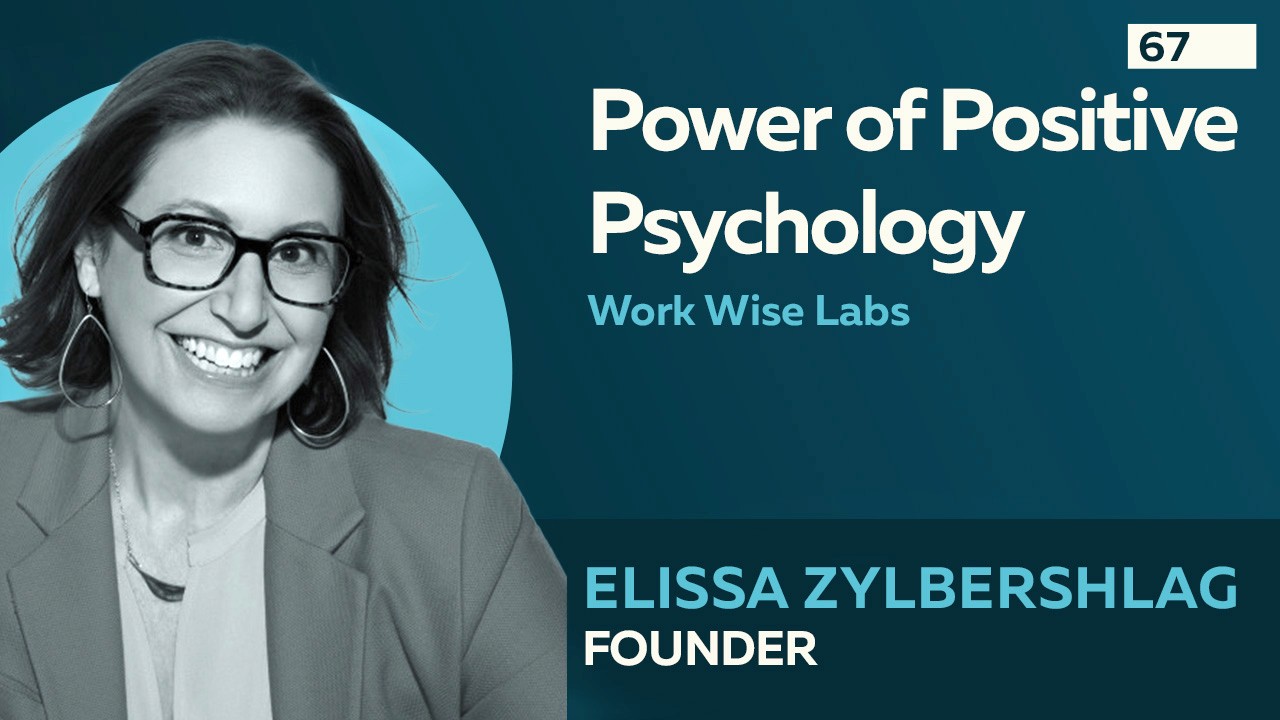
Elissa Zylbershlag on Positive Workplaces, Better Leadership, and Why Conflict is Not the Enemy
A lot of workplace problems do not start as big problems. They begin as small tensions, poor communication, unclear expectations, or managers who were never really taught how to lead people well. Over time, those little issues grow, morale drops, and work becomes a place people tolerate instead of a place where they can actually thrive.
That is what makes this episode of the Healthy Enterprise Podcast so interesting. Heath Fletcher sits down with Elissa Zylbershlag, founder of Work Wise Labs, for a conversation about proactive HR, positive psychology, leadership coaching, and how healthier workplaces do not happen by accident. They are built with intention, awareness, and the willingness to deal with issues before they grow into something bigger.
Her Work Started Long Before Work Wise Labs
Elissa did not begin by setting out to build a workplace coaching business. Her path started in anti-bias education, where she spent more than twenty years working mostly in nonprofits and education-focused spaces. That work shaped the way she sees people, conflict, and culture. It also gave her a deeper understanding of how bias shows up everywhere, not just in schools or public institutions. As she explains in the episode:
“I was an anti-bias educator for more than 20 years. I worked with students and teachers, and we would go in and talk about discrimination, bias, and hate. And as my career progressed, I realized the workplace is a hotbed of that. Then I realized, wait a minute, families are a hotbed of that, and friend groups are a hotbed of that.”
That is an important thread in the conversation. Bias is not limited to one setting. It follows people into schools, families, workplaces, and leadership teams. Once Elissa saw that clearly, the next step started to take shape.
Anti-Bias Work Led Her Toward Something More Positive
One of the strongest parts of this episode is hearing Elissa explain the shift she made in her own work. After years of having heavy conversations around discrimination, stereotypes, and harm, she started asking a different question. What if the real goal was not only to address what is wrong, but also to build what is right? That is when positive psychology came into the picture. She describes the shift this way:
“It just kind of burnt me out. It was dark. There were a lot of really heavy conversations. I started to realize that the goal of all of this was to create places that were positive and in harmony. I’m a very positive person by nature, and I came across this whole idea of positive psychology.”
That moment matters because it changed the direction of her work. Instead of focusing only on problems, she became interested in what helps people flourish.
Positive Psychology Changed the Way She Sees Work
Elissa explains positive psychology in a way that is easy to connect with. Traditional psychology often centers on diagnosing what is wrong and helping people get back to baseline. Positive psychology asks a different question. What is right with people, and how do we build from there? She puts it simply:
“Psychology is about diagnosing problems and fixing those problems. It’s about bringing people back up to zero. Positive psychology is instead of looking at what’s wrong with people, let’s look at what’s right with people, and that brings people health and wellness and gets them to flourish.”
That idea sits at the center of Work Wise Labs. Instead of building workplaces around correction, punishment, or constant stress, Elissa helps leaders and teams pay attention to strengths, energy, self-awareness, and relationships. That does not mean ignoring real problems. It means solving them from a healthier starting point.
Work Wise Labs Grew Organically for a Reason
What stands out in this conversation is how naturally Work Wise Labs came together. Elissa did not force it into existence with a grand plan from the start. She started experimenting with positive psychology trainings inside organizations where she worked, and people responded.
She asked for room to “play” with these ideas, built programs, tested them, and watched them resonate. Then the word started spreading. She tells that story with a lot of honesty:
“I created this LLC. I created Work Wise Labs. And then I started, you know, for that first university, and I did it. And then my brother said to me, ‘You need to start talking to people and telling them.’ And I was like, ‘What would I say?’ He was like, ‘You’re doing it anyway. Just tell people you’re doing it.’”
That line says a lot. Sometimes a business starts when someone realizes the work is already happening, the value is already clear, and the next step is simply naming it and owning it.
What She Actually Helps Leaders Work Through
This episode does a good job of showing that Elissa’s work is not fluffy or vague. It is practical, personal, and often very real. She works in three main ways:
leadership development for newer leaders
team-building workshops
one-on-one coaching
And while the topics vary, one big question keeps showing up.
“Every single client that I have, what’s next is different for different people. But every single client I have is asking, what’s next?”
That is such a strong insight from the episode. Some people are trying to figure out what retirement looks like. Some are trying to lead better. Some are trying to figure out who they are outside of work. Some are trying to decide whether they should keep doing the thing they trained for at all. It is a leadership question, but it is also a human one.
Why Self-Awareness Matters More Than Most People Think
One of the most useful parts of the conversation is the way Elissa talks about self-awareness. She pushes past the usual definition and explains that it is not only about knowing your values, passions, and goals. It is also about understanding how other people experience you. That is where one of the strongest ideas in the episode shows up: the mirror and the portrait. She explains it like this:
“The mirror is how you see yourself. Sometimes you’re looking in a funhouse mirror. Sometimes your self-perception is a little off. And then we have the portrait. Every person you meet has painted a portrait of you.”
That is such a good framework because it makes feedback feel less threatening and more useful. People are always responding to us. Their reactions, patterns, and feedback are data. She reinforces that with another great line from the episode:
“Feedback from one person is an opinion. Feedback from two people is a pattern. And feedback from three or more people is as close to a fact as you’re going to get.”
That idea alone makes this conversation worth hearing.
Conflict Is Not the Problem Most People Think It Is
A lot of people assume a good workplace means a conflict-free workplace. Elissa pushes back on that in a really helpful way. She makes it clear that conflict is not only normal, but it is also unavoidable. The real issue is not whether conflict exists. It is whether people know how to address it in a healthy way. She says it clearly:
“There is no workplace on earth that doesn’t have conflict. And I would add that not all conflict is bad.”
Then she takes it a step further:
“When conflict is addressed, 75 percent of the time it resolves, and relationships are better for it. Conflict is only bad when people don’t address it, when it goes unaddressed.”
That is one of the most practical takeaways in the whole episode. Healthy workplaces are not the ones with no friction. They are the ones where people know how to work through tension instead of letting it rot.
Why Fun and Supportive Workplaces Actually Matter
Another thing this episode gets right is that it does not treat “fun” like a throwaway word. Elissa believes people stay where they feel supported and where work feels human. That does not mean every workplace has to be playful all the time. It means people need connection, trust, and room to breathe.
She gives examples of how she gamifies work, uses team-based exercises, and creates workshops that help people connect instead of just sitting through dry trainings. That is part of what makes Work Wise Labs feel different. The goal is not just to correct bad behavior. It is to create environments where people can actually do their best work.
Networking and Visibility Are Fueling the Growth
Toward the end of the episode, Heath asks how she grows the business, and Elissa’s answer fits everything else she says throughout the conversation. She grows it through connection and experience. She says two things work best:
Talking to people
Letting people experience the work
That is why she runs short free virtual sessions called Just a Touch, where people can get a feel for the kind of workshops and coaching she offers. It is smart, but it also fits her style. She is not trying to force the sale. She is trying to let people feel the value for themselves.
Listen or Watch the Full Episode
If this conversation stood out to you, the full episode is worth your time. Heath and Elissa go deeper into anti-bias education, positive psychology, leadership confidence, workplace conflict, and how coaching helps people figure out what comes next.
Better Workplaces Start Before Things Break
Healthy organizations are rarely built through reaction alone. They grow when leaders invest in culture early, pay attention to communication, and create environments where people feel supported enough to do their best work. That kind of intentional leadership is closely tied to how companies grow over time. At Bullzeye Global Growth Partners, we believe that strategy, culture, and leadership alignment are all part of the same growth equation.
If your organization is working to build a stronger, more connected workplace while continuing to scale, connect with Bullzeye Global Growth Partners to explore how the right growth partnership can support both people and performance.