Insights
Apr 1, 2026
A Surgeon’s Mission to Reinvent Healthcare Access
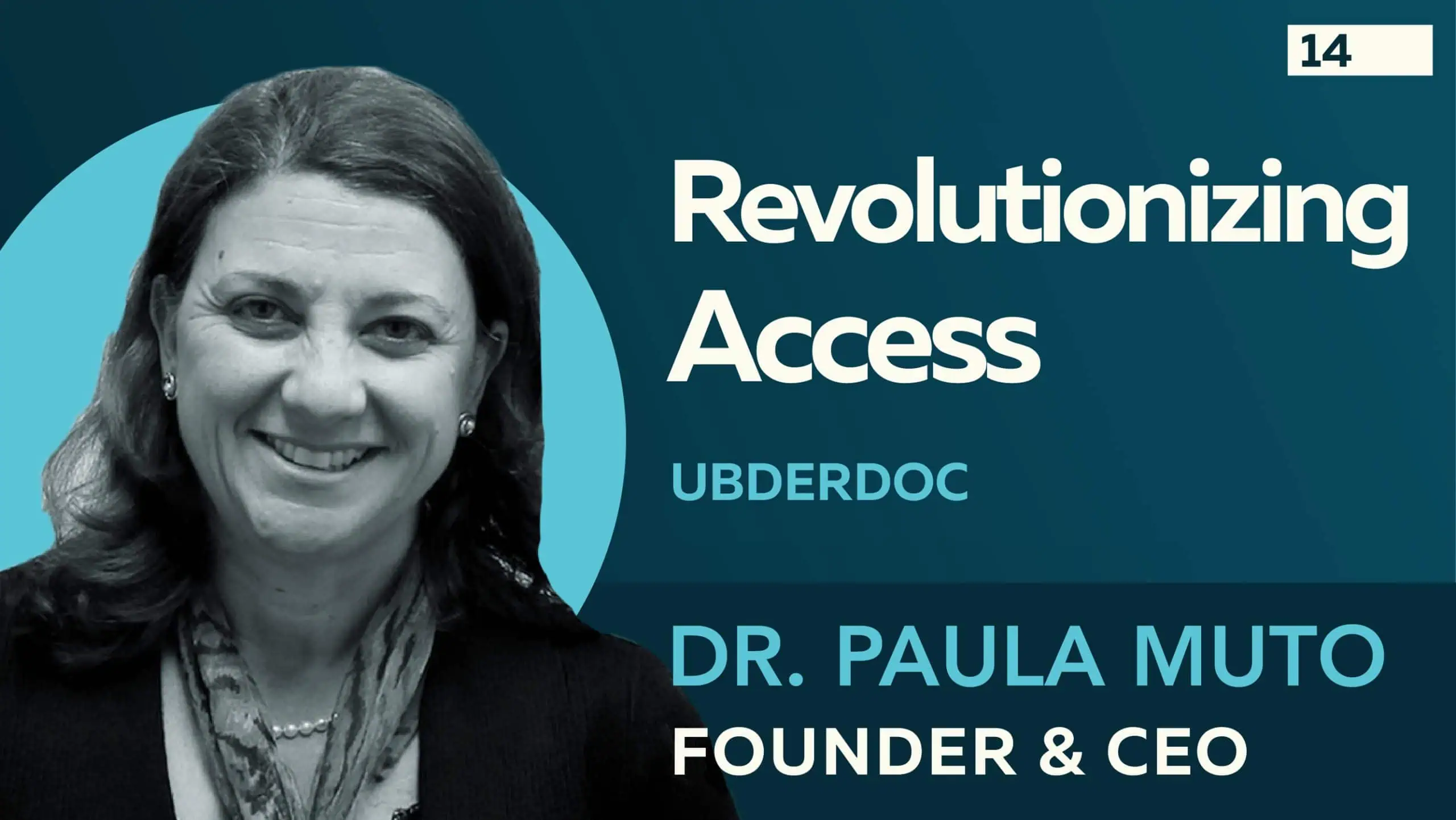
That tension sits at the center of this episode of the Healthy Enterprise Podcast, where host Heath Fletcher speaks with Dr. Paula Muto, a vascular and general surgeon and founder of UberDoc.
Access to care is one of the most talked-about challenges in modern healthcare, yet for many patients, it still feels unnecessarily complicated. Long wait times, confusing insurance requirements, and administrative barriers often stand between people and the care they actually need.
That tension sits at the center of this episode of the Healthy Enterprise Podcast, where host Heath Fletcher speaks with Dr. Paula Muto, a vascular and general surgeon and founder of UberDoc. Drawing on decades of experience running her own practice, Dr. Muto shares how her journey as a surgeon led her to question the way healthcare systems operate and ultimately inspired her to build a solution focused on access and transparency. As she explains early in the conversation:
“I'm trying to disrupt, or rather restore, healthcare because I'm very passionate about it.”
A Career Built in the Real World of Medicine
Dr. Muto comes from a family deeply rooted in medicine, with generations of surgeons practicing in Massachusetts. But while many physicians spend their careers inside hospital systems or large groups, she chose a different path. After finishing her vascular training and briefly working for a group practice, an unexpected turning point pushed her toward independence.
“I just landed in my dad's office, and I said, ‘Okay, I'm going to not work for anyone else again.’ And so I became a solo private practice doctor almost by necessity at first and by choice soon after.”
That decision eventually led to the creation of the Muto Vein Center, where she built a practice focused on vascular care while also managing the operational realities of running a medical business. Operating independently gave her something many physicians never experience: a complete view of how healthcare actually works behind the scenes. From billing and collections to scheduling and insurance approvals, she saw firsthand how complicated the system had become.
The Hidden Burden Behind Modern Medicine
One of the biggest challenges physicians face today is not clinical care. It is the growing administrative workload surrounding it. In the conversation, Dr. Muto describes how documentation, insurance requirements, and compliance tasks often consume more time than patient care itself. She recalls a phrase used by one of her longtime nurses that captured the problem perfectly.
“My nurse Barbara used to talk about the 70-minute hour. In other words, you have 60 minutes, but you have 70 minutes worth of tasks, and 90 percent of them have nothing to do with taking care of the patient.”
For many physicians, these pressures create frustration and burnout. The system that was meant to support patient care often becomes a barrier to it. That disconnect became increasingly obvious as medical technology advanced while healthcare processes remained largely unchanged.
When Medicine Evolves but Healthcare Systems Do Not
Medical innovation has transformed how many conditions are treated. Procedures that once required long hospital stays can now be completed in outpatient settings in minutes. Technology has improved outcomes, shortened recovery times, and expanded treatment options. But the infrastructure surrounding healthcare has struggled to keep up. Dr. Muto described the gap in a way that resonated with many listeners.
“We were changing how we take care of patients, and we still have this clunker of a system built in the 60s when everybody got admitted. It's like, no, no, no, time out. We have to meet patients where they are.”
From her perspective, the system often prioritizes processes and billing structures instead of solving patient problems efficiently.
“It's not putting the patient first. It's putting the company first. It's putting the billable first.”
Seeing this pattern repeatedly pushed her to start thinking differently about how patients connect with specialists.
The Idea That Led to UberDoc
UberDoc was born from a simple question: why is it so difficult for patients to see the specialist they need? Dr. Muto had watched patients struggle with referrals, insurance authorizations, and network restrictions even when the right doctor was available nearby. The delays often created unnecessary anxiety and additional appointments. Her goal was to solve a single problem.
“I just wanted to solve one problem. Access.”
She explains how the system often stops patients before they even reach a doctor.
“If you could go online and find a urologist nearby available and make an appointment, what stops you from doing that? The system stops you at the door. Do you have the right insurance? Do you have the right referral? Do you have the right authorization?”
UberDoc was designed to remove those barriers.
How the UberDoc Model Works
UberDoc is built around a simple concept: connect patients directly with specialists through a transparent, easy-to-book appointment system. Patients can search for a specialist near them, view available appointment times, and book directly through the platform. Instead of navigating insurance approvals, the visit is paid for upfront using a transparent price set by the physician. The platform handles scheduling and payment processing, while doctors confirm the appointment with a quick approval. Dr. Muto summarizes the goal in a single sentence that captures the philosophy behind the platform.
“You just want a doctor and a patient in a room together.”
The model benefits both sides of the healthcare experience. Patients gain faster access to specialists, while physicians reduce administrative overhead and receive immediate payment for the visit. Since launching the platform, UberDoc has grown into a network that includes thousands of physicians offering appointment availability through the system. Dr. Muto’s vision for the future is ambitious but clear. She hopes to see UberDoc integrated into clinics across the country so patients can easily access specialists when they need them.
UberDoc’s Next Phase: Entering the Public Markets
UberDoc’s mission to simplify healthcare access has now reached an important milestone. The company is publicly traded on the Canadian Securities Exchange (CSE) under the ticker symbol $APPT, marking a new phase of growth for the platform. Becoming a public company gives UberDoc additional flexibility to expand its impact. The company plans to use its public market access to broaden its service offerings, strengthen its technology infrastructure, and extend the platform into new markets where patients and physicians are looking for more direct access to care.
UberDoc is also preparing to expand its visibility with U.S. investors. The company anticipates pursuing an OTCQB listing in the United States in Q2 2026, which would make its shares more accessible to investors across American markets. Additional details regarding the transaction and listing can be found in the CSE’s bulletin and the company’s filings available on its profile on SEDAR+, here.
Learn More About Dr. Paula Muto and UberDoc
Dr. Paula Muto continues to practice medicine while leading the growth of UberDoc. Her work focuses on improving access to care, increasing transparency in healthcare pricing, and helping patients connect directly with specialists. If you would like to learn more about Dr. Muto and UberDoc, you can explore the following resources:
These platforms provide additional insight into the company’s mission, updates on the platform’s development, and ways to connect with Dr. Muto directly.
Listen or Watch the Full Episode
If this topic grabbed you, the full episode is worth your time. Heath and Dr. Muto dive deeper into the challenges facing modern healthcare, the entrepreneurial journey behind UberDoc, and the future of direct access to specialists.
Ready to Build a Smarter Growth Story?
Conversations like this remind us that meaningful change often comes from people who see a problem firsthand and decide to build a better way forward. Dr. Paula Muto did exactly that, taking decades of experience inside the healthcare system and turning it into a solution focused on access, transparency, and patient care.
If your organization is doing meaningful work in healthcare, health technology, or any industry where innovation matters, your story deserves to be told with clarity and credibility. At Bullzeye Global Growth Partners, we help companies translate real expertise into messaging, content, and growth strategies designed to build trust and create long-term momentum. Connect with Bullzeye Global Growth Partners to explore what a true growth partner relationship looks like, built around insight, consistency, and sustainable growth.